Capacity Building Programs
Capacity Building Through Applied and Innovative Engineering
I enjoy designing, assembling, and troubleshooting small electronic and embedded systems. This work sits at the intersection of hardware, software, and practical problem solving. Many of the prototypes I build on my workbench ultimately evolve into full teaching labs or research platforms that support experiments in IoT, SCADA, industrial control, and cybersecurity. Supported by my state and federal grants, I intentionally incorporate hands-on components into my research activities so that students can participate in building real systems and later use these artifacts for evaluation, experimentation, and long-term capacity building within the laboratory.
Through these projects, I give students far more than theoretical exposure. They work with real devices, explore real communication protocols, and confront real system limitations. Whether we are constructing sensor networks, analyzing industrial control traffic, or examining the security of embedded systems, my focus is on transforming complex technical concepts into meaningful, hands-on learning experiences.
This combination of practical engineering, iterative prototyping, and intentional instructional design helps me create learning environments that reflect the challenges of modern cyber-physical and interconnected systems. My goal is to use my technical work to provide students with applied skills and a deeper understanding that bridges classroom learning with the technologies shaping today’s digital infrastructure.
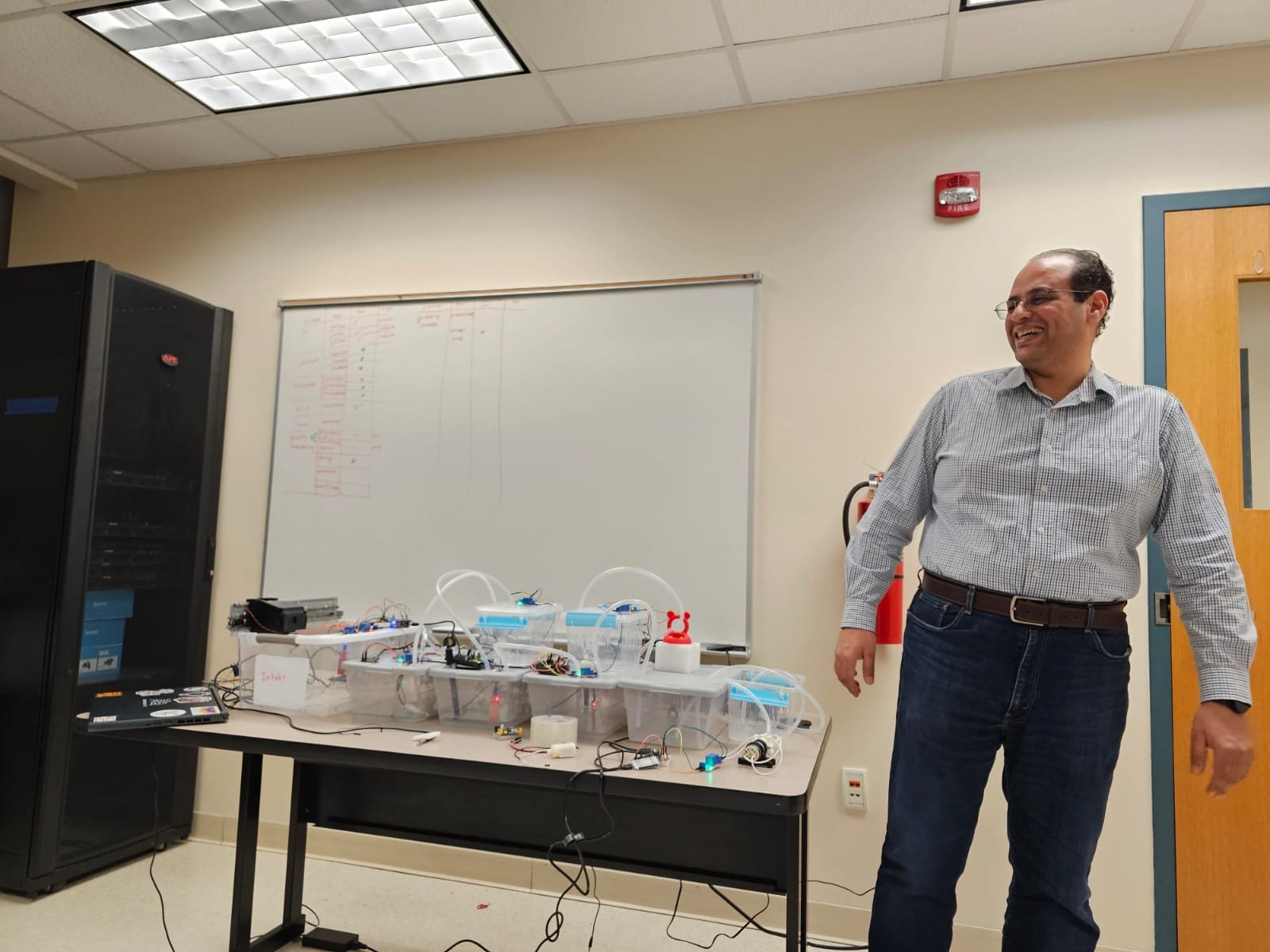
I designed and worked with graduate and undergraduate students to build a fully instrumented, sensor-driven control system that monitors flow rates, tank levels, and water quality while autonomously operating pumps and valves. The platform functions as a realistic miniature industrial control environment and gives students an authentic view of how SCADA and process automation systems behave beyond simulations.
In parallel with the physical system, I led a collaborative multi-university effort to develop an interactive digital twin equipped with immersive XR emulation for cybersecurity training. This virtual environment incorporates AI-driven attack and defense modules and connects directly to the physical control setup. The XR model reflects live hardware behavior, allowing users to observe system responses in real time and explore how digital commands influence physical processes.
To deepen the learning experience, we integrated a suite of controlled cyberattack scenarios, including false-data injection, spoofed sensor telemetry, and unauthorized actuator manipulation. When activated, these attacks produce visible effects in both the XR model and the physical hardware. Learners can immediately see how security breaches disrupt operations and compromise system integrity.
This end-to-end platform brings together engineering, cybersecurity, and experiential learning. It helps students understand how vulnerabilities in industrial networks lead to real operational consequences and provides a hands-on environment where they can investigate these challenges with clarity and confidence.
A second copy of the full water treatment system has now been deployed at Virginia Tech, creating a multi-site environment that supports cross-university experimentation, collaborative research, and distributed cybersecurity training between VMI and VT.
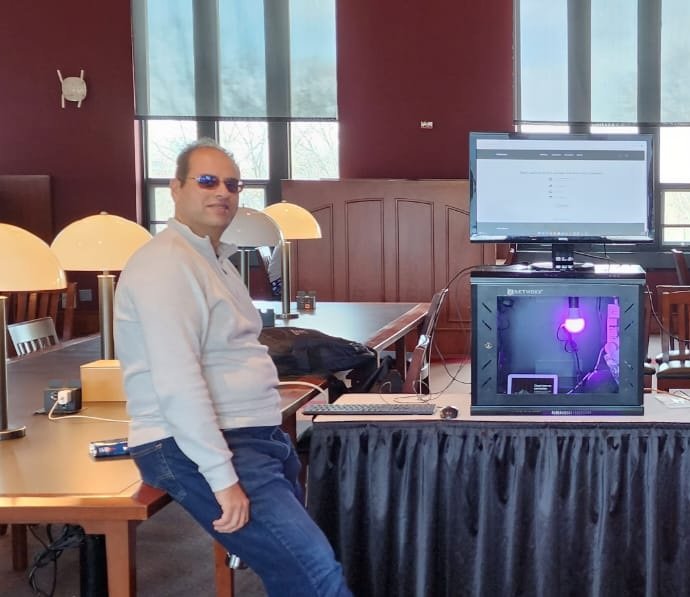
I designed the system architecture and supervised a team of undergraduate and graduate students in developing a compact, Wi-Fi–enabled enclosure that collects data from embedded sensors and streams it to either a local server or a cloud-based dashboard. The device serves as a flexible IoT edge platform that supports realistic data acquisition, automation logic, and remote monitoring.
The platform has become a reusable instructional and research asset across several of my courses. Students use it to prototype environmental sensing modules, event-driven control routines, device-to-server communication pipelines, and lightweight security protections for data in transit. Graduate students have also incorporated the device into their thesis research, extending it with advanced analytics, communication layers, and system-level behavior modeling.
Through collaboration with faculty colleagues, the system has been augmented with an XR extension that provides immersive visualization of sensor activity, device interactions, and network behavior. This interface helps students observe how digital commands propagate through the system and influence physical processes in real time.
Building on this foundation, we deployed a network of these IoT boxes across multiple sites at VMI and Virginia Tech. This multi-node, multi-location deployment supports collaborative experimentation, distributed sensing, and cross-campus cybersecurity exercises. It offers an authentic testbed for exploring communication protocols, resilience challenges, and coordinated IoT operations at scale.
By designing, mentoring, and overseeing the development of this platform, I provide students with hands-on experience that bridges classroom concepts with real engineering environments. The system continues to support capacity building, applied research, and experiential learning across both institutions.
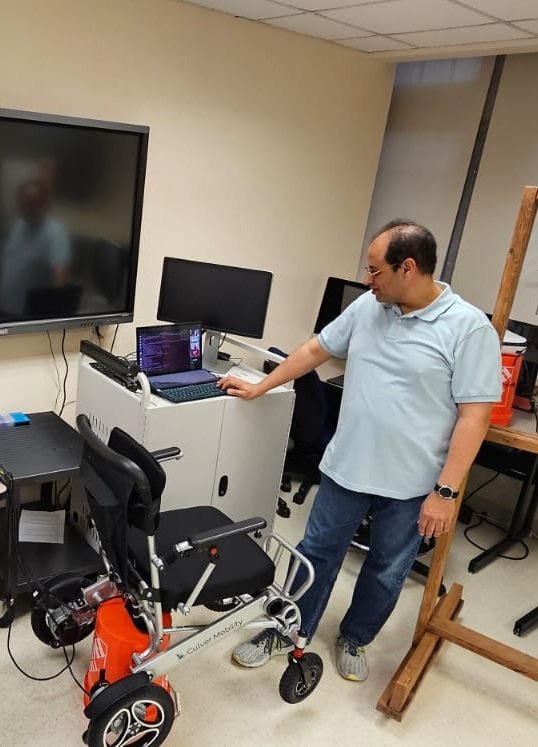
I designed the system architecture and supervised students in developing an assistive mobility prototype that integrates voice-command control, ultrasonic obstacle detection, intuitive feedback indicators, and multiple safety mechanisms to support users with physical challenges. The device brings together sensing, control, and human-centered interaction in a compact platform that demonstrates the practical requirements of assistive technologies.
This project is incorporated into several of my courses because it illustrates how embedded systems must operate when human safety and accessibility are central design constraints. Students work directly with real sensors and actuators, learning how to build devices that remain responsive, dependable, and easy to use in dynamic environments.
The prototype blends practical embedded design with human-centered engineering and encourages students to think beyond pure functionality. It helps them understand how thoughtful hardware and software decisions can enhance user experience, improve reliability, and support individuals who rely on assistive technologies in daily life. Through this project, students gain experience in designing systems where technical performance and human needs must be aligned with equal priority.
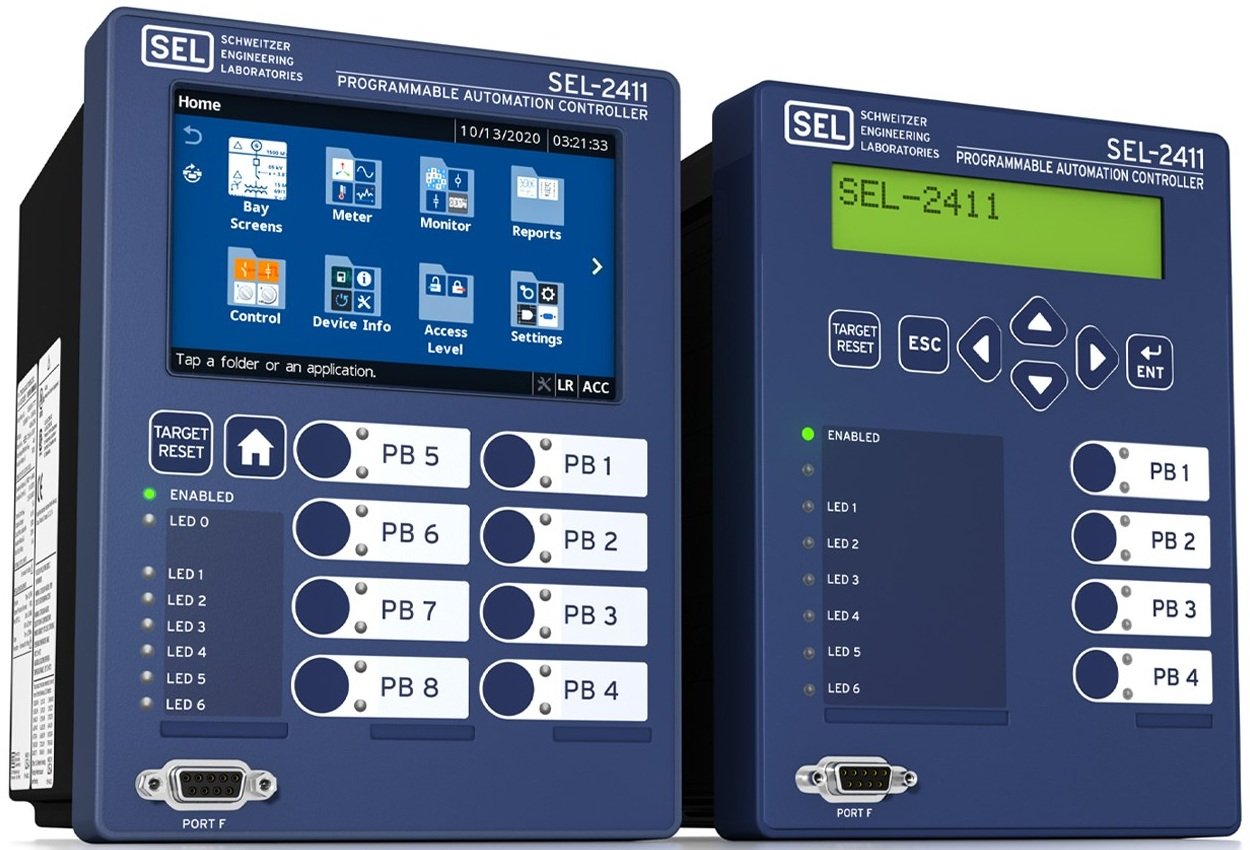
I designed and directed the development of a large-scale, industry-grade SCADA testbed that models modern smart grid operations using real hardware, authentic control logic, and full protocol support. Built around utility-class RTUs, PLCs, protective relays, industrial switches, and programmable outstation/master configurations, the testbed enables realistic emulation of field operations, relay coordination, and supervisory control workflows. It supports both Modbus and DNP3 communications, providing students and researchers with a high-fidelity environment that mirrors real utility infrastructure rather than simplified simulations.
This platform represents one of the advanced laboratory systems in our program, incorporating hardware normally found in operational substations and industrial control rooms. The testbed is designed to enable experimentation with protocol behavior, control-loop timing, fault responses, and relay interactions in a setting that is structurally comparable to production systems.
To support security-focused investigations, the environment is designed to include AI-driven exploitation modules that inject adversarial behaviors into the communication stack. These modules allow users to explore attacks targeting data integrity, timing manipulation, replay behavior, device impersonation, and protocol-level weaknesses. Because the testbed integrates real equipment, users can observe; directly and physically; how cyberattacks propagate through power-system control logic and how disruptions affect operational stability.
The system is built on an open, extensible foundation, making it suitable for long-term research into SCADA protocol hardening, intrusion detection, moving-target defense, zero-trust enforcement, and resilience engineering. With controlled fault injection and failure modeling, the testbed supports comprehensive evaluation of how cyber incidents and component outages impact situational awareness, state estimation, and overall system reliability.
Although this platform is currently hosted at our labs, we are actively assisting our partners at Virginia Tech in building an extension of the testbed on their site. This expansion will enable large-scale, multi-site experimentation and advanced research investigations that benefit from distributed infrastructure, coordinated control scenarios, and shared cyber-physical security studies across institutions.
This flagship testbed anchors our capacity-building mission: it provides a rare opportunity for students and researchers to engage with real industrial systems, understand the complexity of modern critical infrastructure, and evaluate security and resilience challenges in a controlled but authentic environment.
During my first year at VMI, I dedicated considerable time to designing and building the Institute’s initial research datacenter. Drawing on my engineering background and extensive hands-on experience, I planned the architecture, assembled and integrated the hardware, configured the networks, provisioned the operating systems, and deployed the open-source platforms required to bring the system online. The environment was built using tools such as OpenStack for virtualized compute and storage and OpenNebula for lightweight orchestration and cluster management, creating a flexible private cloud that supported coursework, simulation environments, and research activities.
After the base platform was completed and the first cluster became fully functional, students continued the effort by extending the system with additional compute nodes, larger storage pools, and improved networking capacity. Through their contributions, the datacenter grew into a more capable and scalable environment that now serves as a central resource for advanced experimentation.
Today, the datacenter operates as a powerful private cloud that supports a wide spectrum of instructional and research needs. It hosts virtual laboratories for networking and cybersecurity, real-time simulation environments for IoT and SCADA systems, analytics workloads, and distributed software development. This infrastructure has become a core asset for capacity building at VMI, enabling hands-on learning, collaborative research, and the type of realistic experimentation that strengthens both teaching and investigative work across multiple programs.
One of the most rewarding projects I led, supported through multiple funded initiatives, was the design and construction of a compact Open RAN (O-RAN) testbed for 5G security research. I drew heavily on my engineering expertise to architect the system and supervised graduate and undergraduate students as they assembled the hardware, configured the software, and built the overall experimentation environment. Several graduate students used this platform as the foundation for their thesis research, extending its capabilities and developing security evaluation methods based on their work.
The testbed incorporates a diverse collection of software-defined radios, including USRP X310 units, B210s, B205s, and additional SDR modules. These radios were installed in controlled RF-shielded enclosures that allowed us to emulate realistic 5G communication scenarios without affecting external spectrum. The system relies on open-source O-RAN management and control software to orchestrate radio units, distributed units, and core network functions, creating a complete end-to-end environment suitable for research and instruction.
Using this platform, students and researchers explored a wide range of 5G protocol behaviors, performance limitations, and security vulnerabilities. The testbed enabled controlled investigation of issues related to synchronization, mobility management, control-plane messaging, and potential exploitation paths within the O-RAN distributed architecture. It also provided the environment needed to prototype and test strategies aimed at hardening 5G communication stacks against adversarial manipulation.
Through this work, students gained rare hands-on experience with real radio hardware, modern cellular protocols, and applied wireless security analysis. The testbed has grown into a valuable institutional resource that supports ongoing research, thesis projects, and advanced experimentation in NextG communication systems.